Kitchen Notes
A collection of foundational habits and practical guidelines for working efficiently and thoughtfully in the kitchen.
Mise en Place
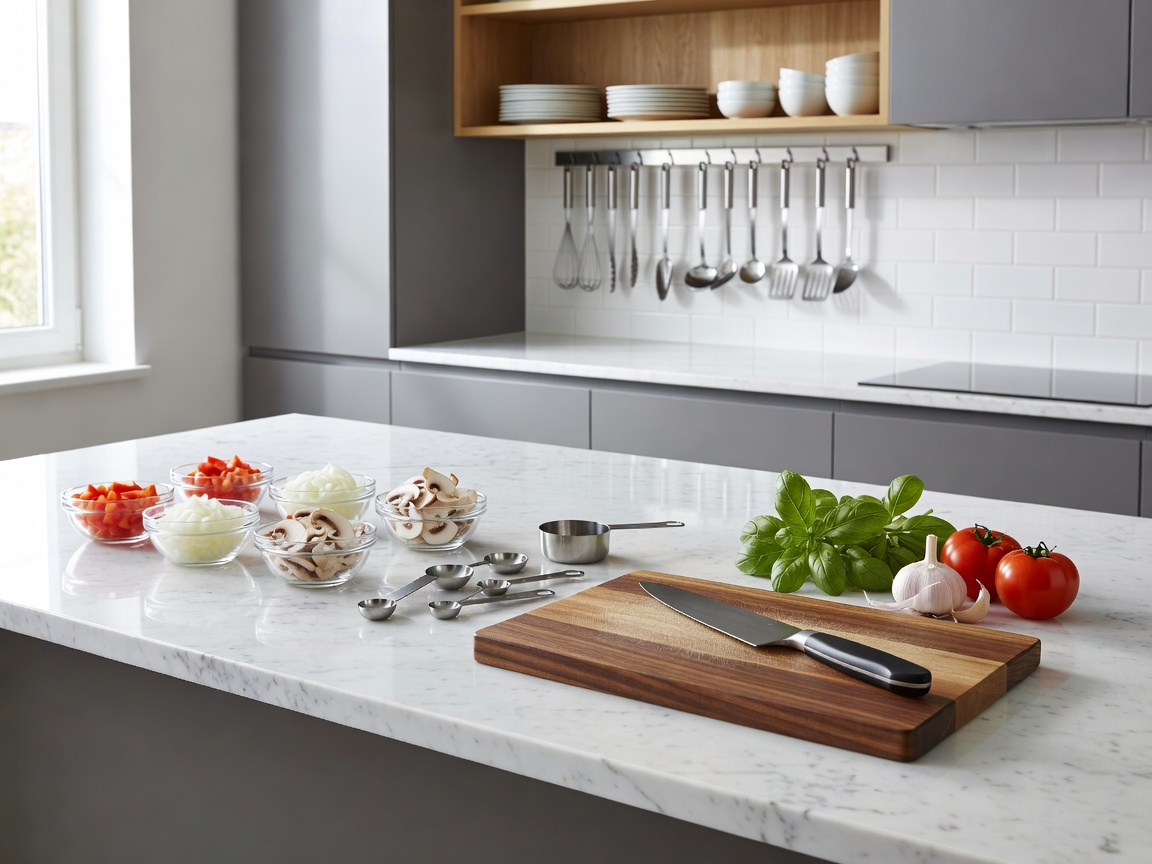
Literally "putting in place." Before heating a pan, every ingredient should be measured, chopped, peeled, and arranged. Cooking requires focus on the application of heat, not frantic chopping while onions burn.
Knife Basics
A dull knife is dangerous because it requires force, which leads to slipping. Keep your chef's knife honed. Always use a stable cutting board (place a damp towel underneath if it slides). Curl your guiding fingers into a "claw" to protect your fingertips while chopping.
Seasoning Gradually
Do not wait until the very end to add salt. Season in layers. Salt onions as they sweat to draw out moisture. Season meat before searing. Salt the sauce as it reduces. Tasting and adjusting constantly creates depth, whereas salting only at the end creates food that just tastes salty on the surface.
Temperature Awareness
Ingredients cook best when they don't shock the pan. Bring proteins to room temperature (briefly and safely) before searing for a better crust. Conversely, pastry doughs require everything to be ice cold to maintain flaky layers.
Cleaning As You Cook
Maintain order. When a cutting board is no longer needed, wash it or move it. When a vegetable peels, discard the waste immediately into a dedicated bowl. A cluttered workspace leads to cross-contamination and mental stress.
Managing Leftovers
Cool hot food rapidly by transferring it to shallow containers before refrigerating. Do not leave perishable foods at room temperature for prolonged periods. Label and date your storage containers.