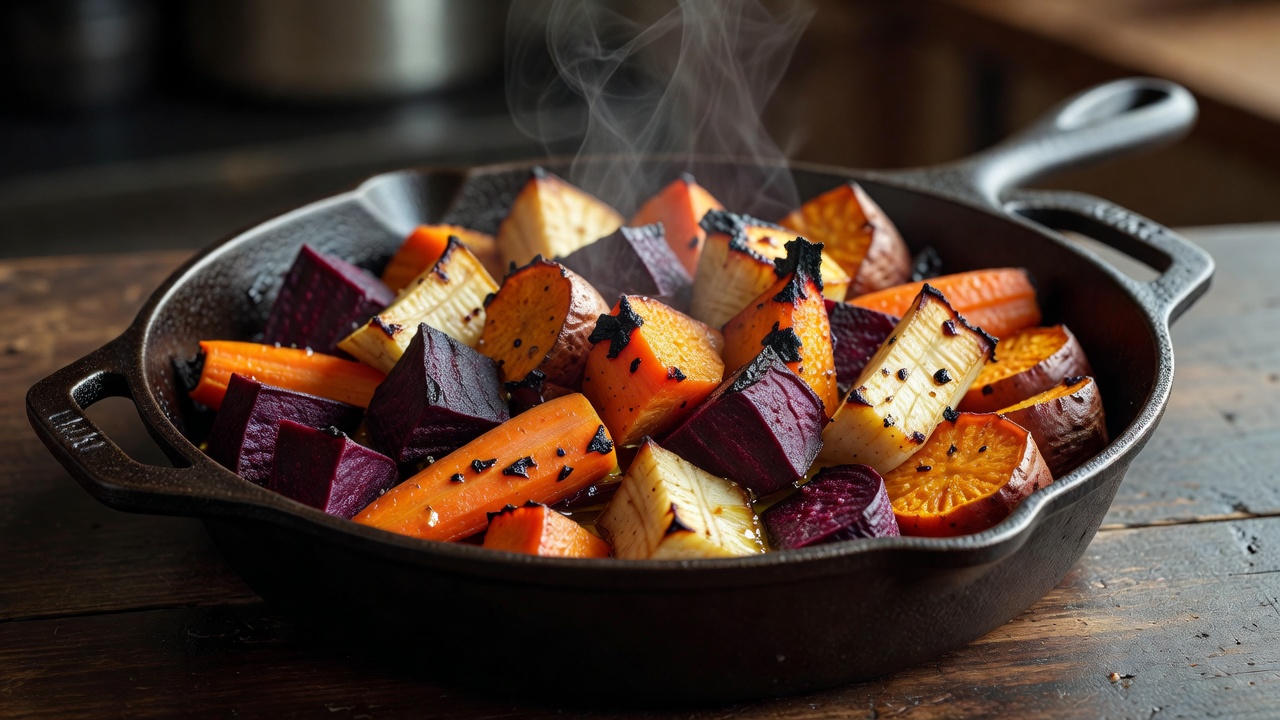
Consider a raw carrot. It is crunchy, faintly sweet, somewhat astringent, and filled with water. Its cellular walls are rigid, guarding the starches within. If you consume it raw, your jaw does the mechanical work, and your digestive system works hard to extract the nutrients.
Now consider that same carrot, coated lightly in oil, and exposed to 200°C (400°F) ambient heat for forty-five minutes. It emerges limp, shrunk, wrinkled, deeply browned on the edges, and intensely, almost aggressively sweet. The transformation is not just physical; it is chemical magic.
The Magic of Maillard
The browning you see on the edge of the roasted carrot, the crust of a seared steak, or the outside of a baked loaf of bread is largely due to the Maillard reaction. Named after French chemist Louis-Camille Maillard, it is a complex cascade of chemical reactions between amino acids (proteins) and reducing sugars.
Crucially, this reaction only occurs at higher temperatures—usually above 140°C (285°F). This is why boiling a piece of meat or a vegetable will never result in that savory brown crust; the water restricts the maximum temperature to 100°C (212°F).
Evaporation and Concentration
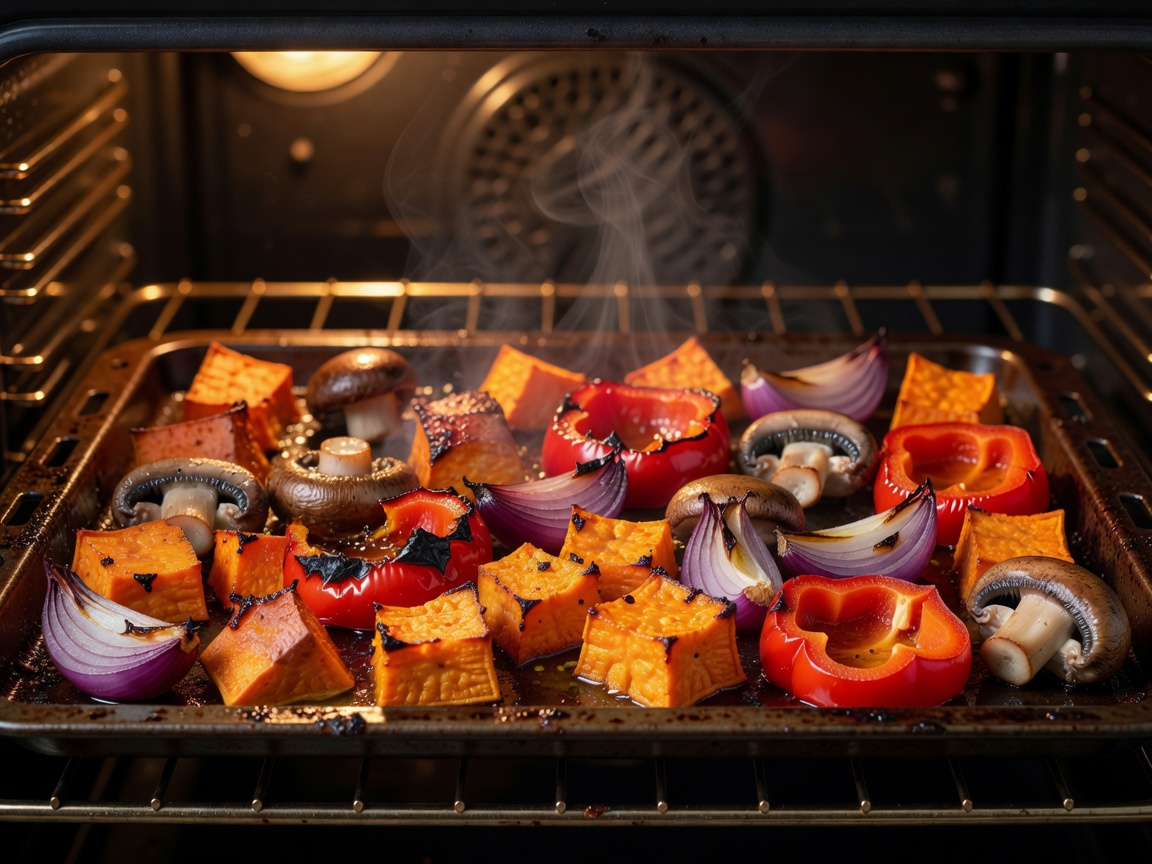
As the carrot roasts, the dry heat of the oven causes the moisture locked within its cells to turn to steam and evaporate. Vegetables are mostly water. As that water leaves, the compounds left behind—the sugars, the minerals, the flavour molecules—become highly concentrated.
This is why roasted vegetables taste so much more intense than boiled ones. Boiling leaches flavour compounds into the water (great if you are making stock, terrible if you want to eat the vegetable). Roasting locks them in and concentrates them.
The Breakdown of Structure
Heat also attacks the physical structure of the ingredient. The rigid hemicellulose holding the plant cells together weakens and breaks down. The tough starches gelatinize, absorbing remaining water and turning soft and palatable. This structural collapse is what changes the texture from snapping-crisp to yielding and tender.
Understanding roasting is understanding patience and environment. It requires giving the oven time to drive off surface moisture, time for the Maillard reaction to initiate, and time for the internal structures to collapse into sweetness.