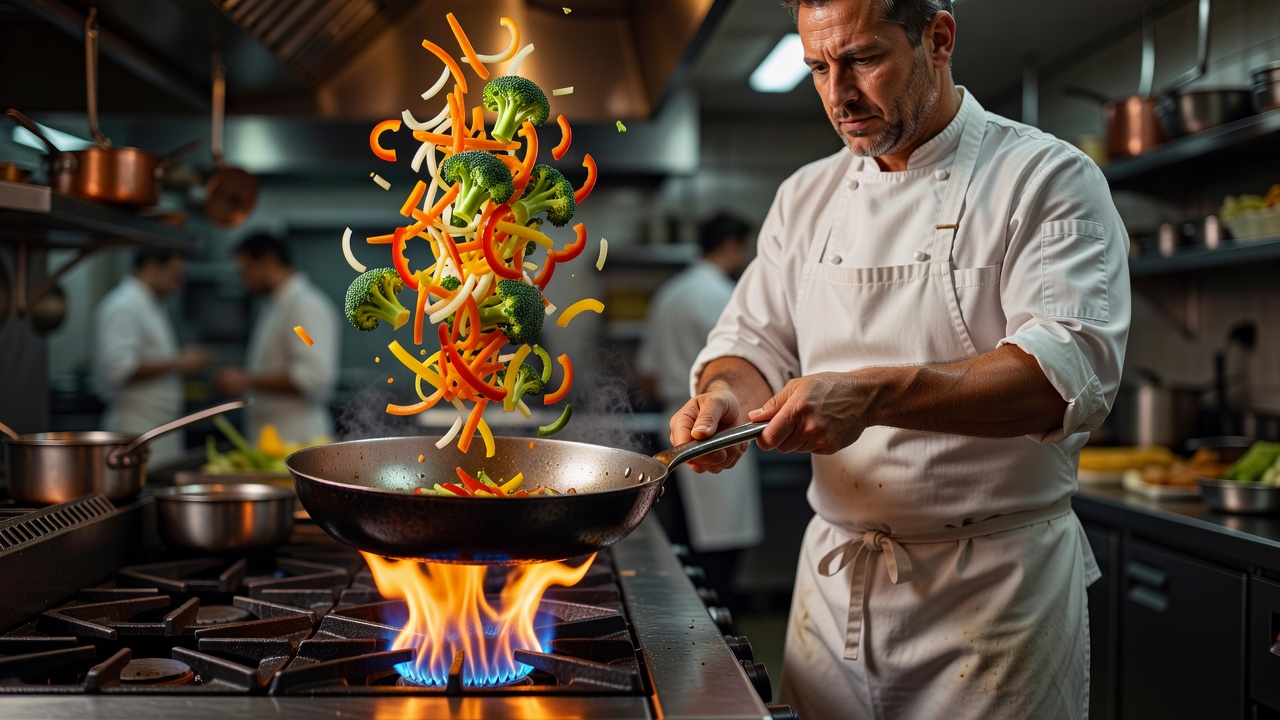
The Objective
The primary goal of sautéing is to quickly cook small, uniform pieces of food while developing surface browning (the Maillard reaction). Because the heat is high and the cooking time is short, the interior of the food retains its texture and moisture.
The Science of the Pan
Sautéing relies on conduction—the direct transfer of heat from the metal pan to the food. A small amount of fat (oil or butter) is required. The fat serves three purposes:
- Heat Transfer: Oil fills the microscopic gaps between the uneven food surface and the flat pan, ensuring even cooking.
- Lubrication: Prevents sticking.
- Flavour: Contributes its own taste and mouthfeel.
Critical Rules for Sautéing
- Uniform Size: Ingredients must be cut to the exact same size so they finish cooking at the same time.
- Dry Ingredients: Surface moisture is the enemy of browning. If food is wet, the energy of the pan is spent boiling off the water (steaming) rather than browning the surface. Pat ingredients dry.
- High Heat: The pan must be hot before food is added. The oil should shimmer, but not smoke heavily.
- Do Not Overcrowd: If the pan is too full, the temperature drops rapidly. The food will release its internal moisture, pooling in the pan, resulting in boiling instead of sautéing. Work in batches if necessary.
- Movement: Food must be kept moving (tossing or stirring) to expose all sides to the hot surface and prevent burning.
Equipment Matters
A proper sauté pan has a wide, flat bottom for maximum surface area and sloped sides to facilitate the "jumping" motion when tossing ingredients. Heavy-bottomed stainless steel, cast iron, or carbon steel are preferred as they retain heat well when cold food is introduced.